
Throwing Techniques
Throwing Stance and Grip
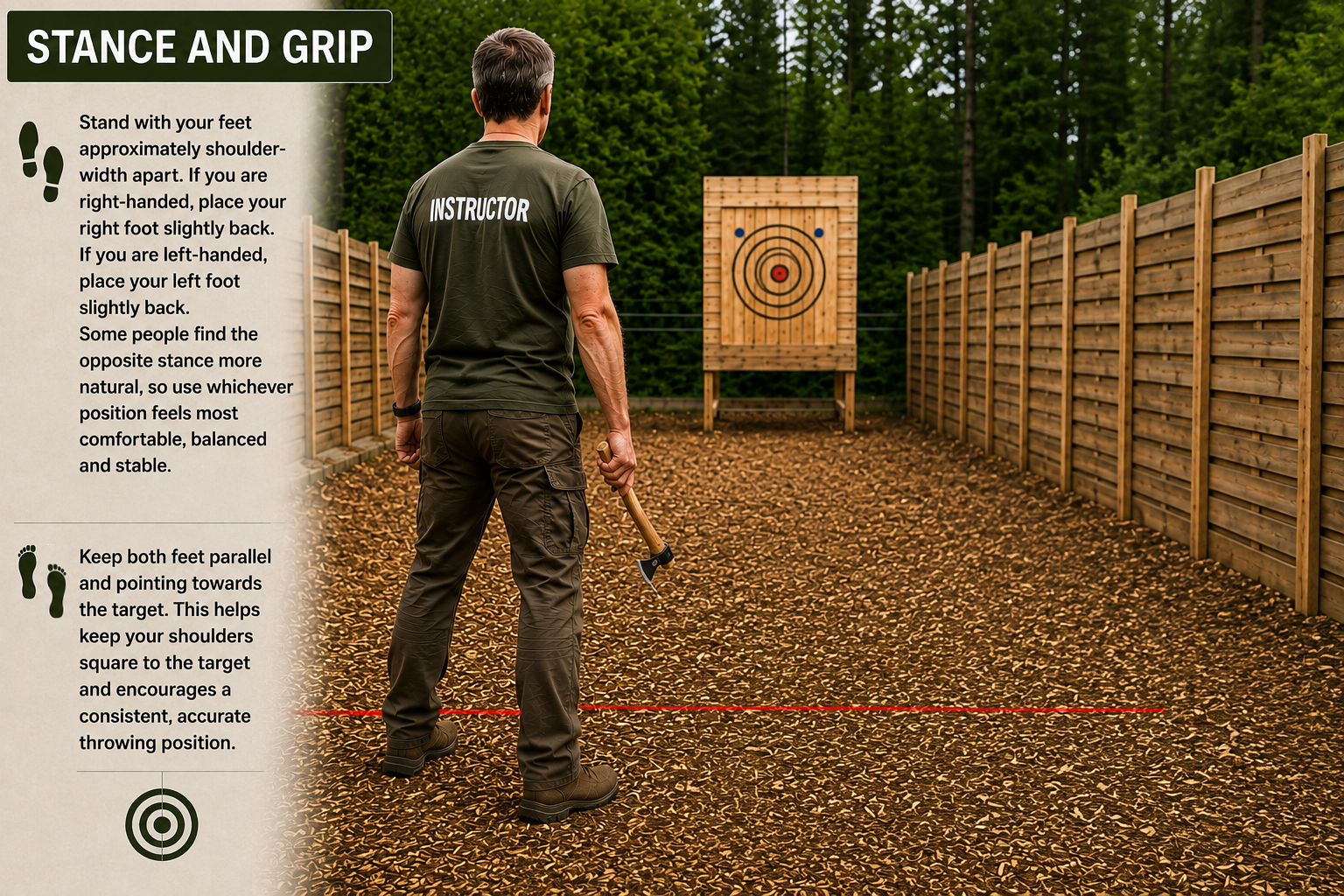
Stand with your feet approximately shoulder-width apart. If you are right-handed, place your right foot slightly back. If you are left-handed, place your left foot slightly back. Some people find the opposite stance more natural, so use whichever position feels most comfortable, balanced and stable.
Keep both feet parallel and pointing towards the target. This helps keep your shoulders square to the target and encourages a consistent, accurate throwing position.
Hold the tomahawk by the base of the handle, using a grip similar to holding a hammer. Wrap your fingers and thumb naturally around the handle, keeping your grip firm but relaxed. Avoid gripping the handle too tightly, as this can restrict a smooth, controlled throw.
The Single-Hand Tomahawk Throw
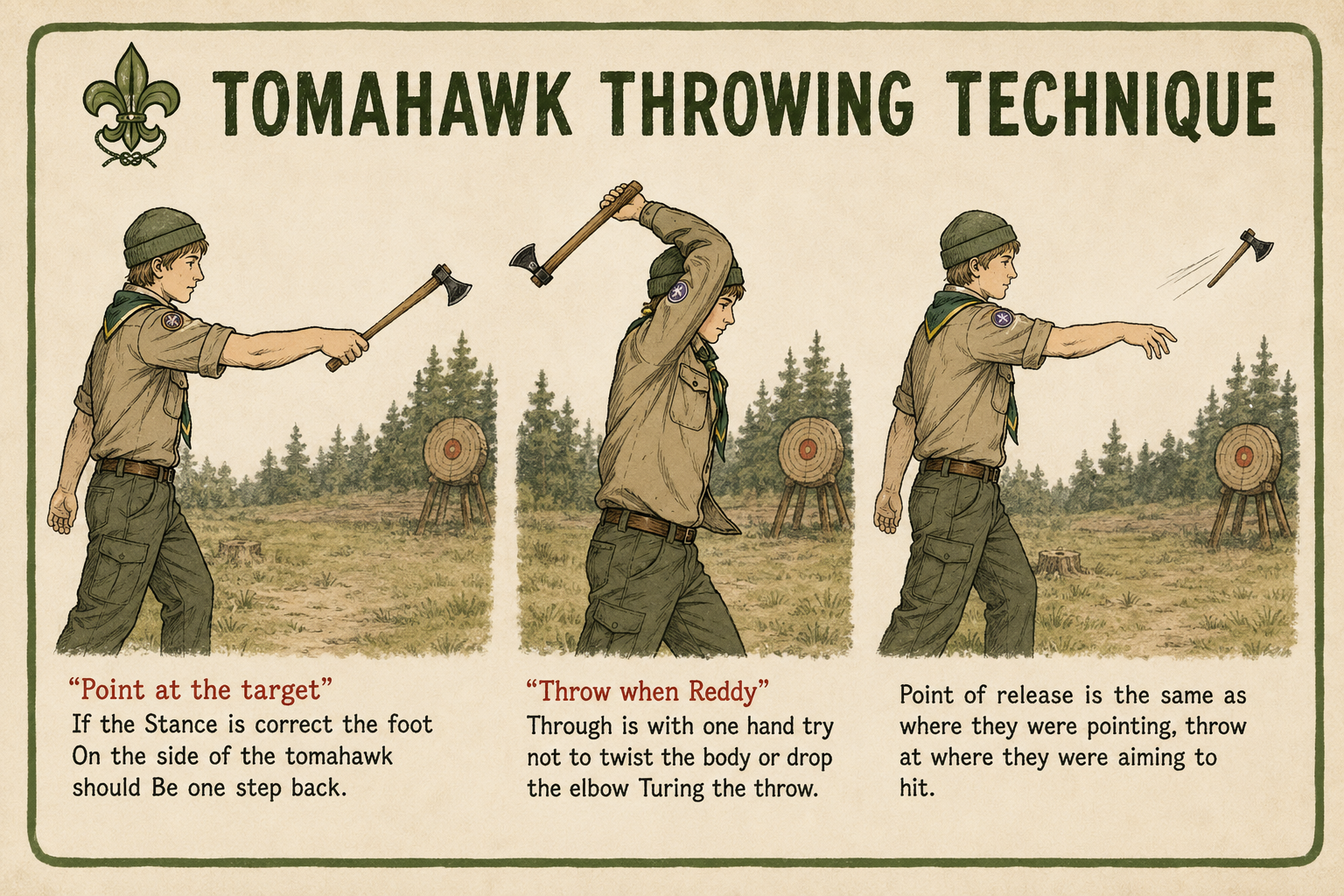
Point the tomahawk towards the target with the cutting edge facing down and your throwing arm fully extended. Focus on a specific point on the target, rather than looking at the target as a whole. This helps improve accuracy.
Raise the throwing arm above your shoulder until it is close to your ear, keeping a slight bend in the elbow. Do not allow the tomahawk to drop behind your back.
Bring the arm forward and down in a smooth chopping motion. As the arm approaches the horizontal position, open your fingers to release the tomahawk.
At the moment of release, your hand should be in a position similar to offering a handshake. Keep the wrist straight and avoid twisting it, as wrist movement can cause the tomahawk to travel sideways.
The throw should come mainly from the movement of the arm, with very little wrist action — you are throwing a tomahawk, not playing darts!
Avoid trying to throw with excessive force. A reasonably sharp tomahawk should require surprisingly little power to stick. Focus on a smooth, controlled movement, consistent release and accuracy rather than speed or power.
Try A 5 Meter Tomahawk Throw
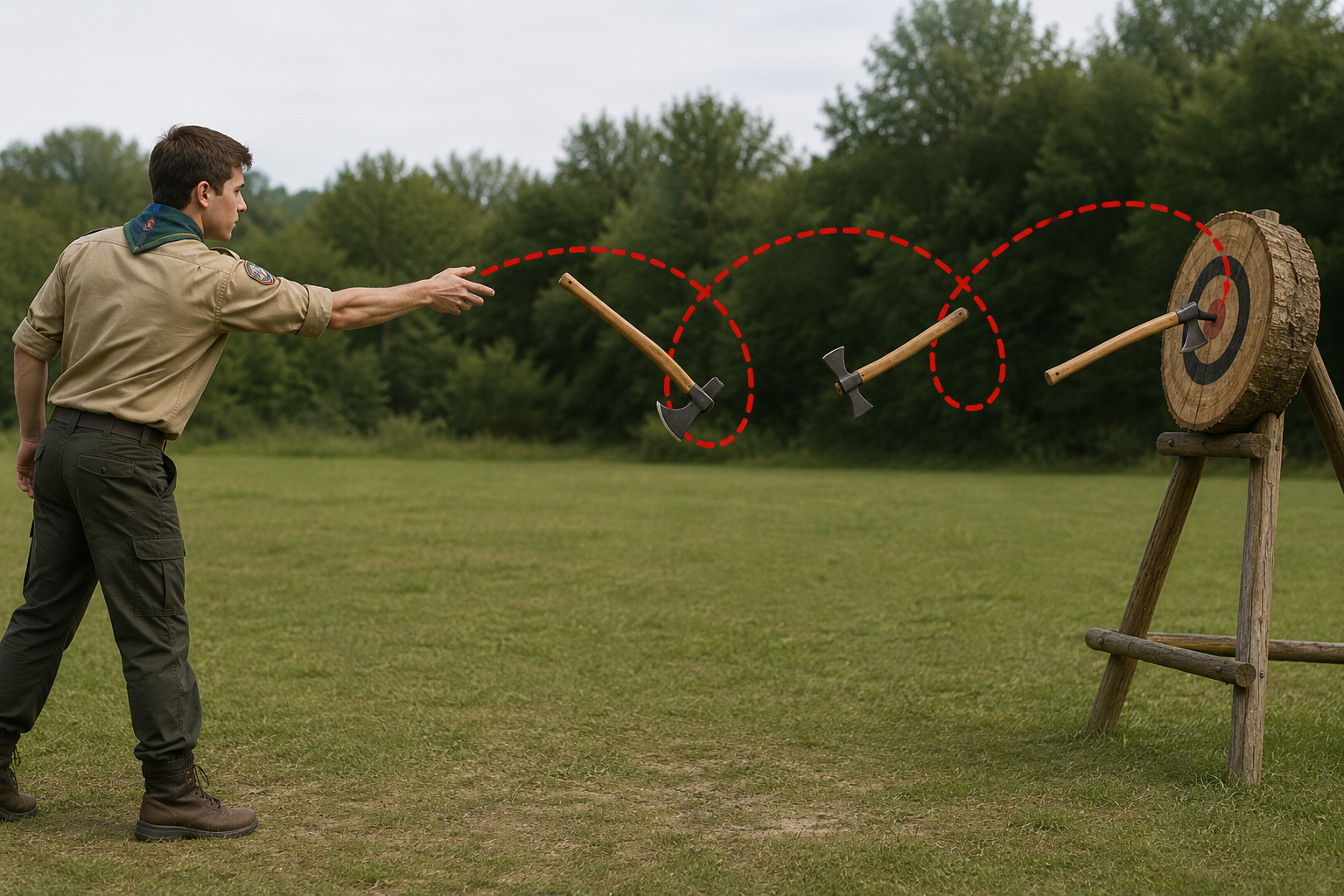
The 5-metre distance can be a useful training distance for developing tomahawk throwing skills.
The throwing technique remains the same as the basic single-hand throw, and the stance and throwing position are unchanged.
The main difference is the orientation of the tomahawk head. At 5 metres, the head faces in the opposite direction before the throw. This changes the rotation of the tomahawk during flight while keeping the basic throwing technique the same.
This makes the 5-metre distance useful for practising control, consistency and understanding how changes in tomahawk orientation affect the throw.
Common Corrections That Will Aid Success
When learning tomahawk throwing, small adjustments can make a significant difference. Common corrections include:
- Tomahawk not sticking – Check your throwing distance and release.
- Tomahawk hitting sideways – Check the head orientation and throwing angle.
- Too much or too little rotation – Adjust the throwing distance rather than changing your basic technique.
- Inconsistent throws – Keep the same stance, grip, arm movement and release point.
- Tomahawk bouncing out – Check that the target is suitable and that the throw has enough controlled penetration.
- Poor accuracy – Focus on a consistent throwing motion rather than trying to correct each throw individually.
- Changing your stance – Keep your feet and body position consistent from throw to throw.
- Overpowering the throw – A controlled, smooth throw is generally more consistent than using excessive force.
The aim is consistency. Make one small correction at a time and practise the same technique until the result becomes repeatable.

Tomahawk Throwing Techniques FAQs
What is the correct stance for throwing a tomahawk?
Stand with your feet approximately shoulder-width apart, with one foot (the same side as your throing arm) slightly back from the other. Both feet should remain parallel and point towards the target. Choose the stance that gives you the best balance and control.
How should I grip the tomahawk?
Hold the tomahawk near the base of the handle with a grip similar to holding a hammer. Keep your fingers and thumb wrapped naturally around the handle with a firm but relaxed grip.
How tightly should I hold the tomahawk?
Avoid gripping the handle too tightly. A relaxed but secure grip allows the tomahawk to move smoothly through the throwing action and helps produce a consistent release.
Where should I aim when throwing?
Choose a specific point on the target rather than looking at the target as a whole. Focusing on a precise point can help improve concentration and accuracy. "Aim small, miss small"
How high should I raise my throwing arm?
Raise the throwing arm above your shoulder until it is close to your ear. Keep a slight bend in the elbow and maintain control of the tomahawk throughout the movement..
Should the tomahawk go behind my head?
No. Keep the tomahawk controlled during the throwing movement and do not allow it to drop behind your back. The throwing action should remain smooth and controlled.
How should I release the tomahawk?
Bring your arm forward and down in a smooth motion and allow the fingers to open naturally at the release point. Keep the wrist straight rather than twisting it.
Should I use my wrist when throwing a tomahawk?
Very little wrist movement should be required. The main movement should come from the arm. Excessive wrist movement can make the tomahawk travel sideways or behave inconsistently.
How hard should I throw a tomahawk?
Do not rely on excessive power. A smooth, controlled throw is usually more consistent than trying to throw as hard as possible. Concentrate on technique, release and accuracy
Why is my tomahawk hitting the target sideways?
This can be caused by the head orientation, throwing angle or an inconsistent release. Make one small correction at a time and concentrate on repeating the same throwing movement.
Why isn't my tomahawk sticking in the target?
Check the throwing distance, release and angle of the tomahawk. The condition and suitability of the target can also affect whether the tomahawk sticks. In Heat the target can dry swo good to splay it with water now and again.
What should I do if my tomahawk has too much rotation?
Avoid changing your whole throwing technique. The throwing distance can be adjusted to help change the amount of rotation while keeping the basic technique consistent. Large amaounts can be fixed by puting the thum up the handle. Small amouts can be fixt with a slight lean in,feet must behind the throwing line but you can move further back.
What if my tomahawk does not rotate enough?
As with excessive rotation, consider the throwing distance rather than trying to introduce unnecessary wrist movement or change the basic throwing action. Tyr moving back from the line a little each time untill it sticks. As a new thrower this will change over time as you improve you technique.
Why are my throws inconsistent?
Try to repeat exactly the same stance, grip, arm movement and release point each time. Consistency is one of the most important parts of developing an accurate throw.
Why does my tomahawk keep bouncing out?
Check that the target is suitable and in good condition. Also check the throwing angle and whether the tomahawk is reaching the target with controlled penetration.
Should I change several things at once when correcting my throw?
No. Make one small correction at a time. This makes it easier to understand what has improved or caused a problem.
What is the purpose of the 5-metre throw?
A 5-metre throw can be useful for developing control and consistency and for learning how the orientation of the tomahawk affects its rotation during flight. Remumber to turn the tomahawk hean around as it with land the other way up.
Is the technique different at 5 metres?
The basic single-hand throwing technique remains the same, including the stance and throwing position. The main change is the orientation of the tomahawk head before the throw.
Should I change my stance for different throwing distances?
The basic stance should remain consistent. Changes in distance should generally be used to influence the tomahawk's rotation rather than constantly changing your body position.
How can I improve my tomahawk throwing accuracy?
Develop a repeatable throwing action. Keep your stance, grip, arm movement and release consistent, focus on a specific point on the target and make only small adjustments when necessary.
What is the biggest mistake beginners make?
Trying to solve every poor throw by changing something different. Instead, concentrate on a consistent technique and make one controlled adjustment at a time.
How do I know when my throwing technique is consistent?
You should be able to reproduce a similar stance, grip, arm movement and release from one throw to the next. Consistency should come before trying to increase distance, speed or power.
Should I throw harder if my tomahawk is not sticking?
No. Increasing power is not necessarily the solution. First check your distance, release, angle and target condition, and work on making the throw smooth and controlled.
What is the most important principle when learning tomahawk throwing?
Consistency. Use the same basic technique, make one small correction at a time and practise until the result becomes repeatable.
My Links
Scouing Links
Location: Essex