
Safety First
Range Supervision
- Leader Ratios: Each activity leader handles a maximum of 3 targets and 5 participants per target (1 throwing, 4 waiting).
- Range Master Role: Appointed when running more than 2 targets; oversees overall range safety, crowd flow, and discipline across up to 6 targets and 2 leaders.
- Throwing Limits: Only 1 person may throw at any single target at a time.
- Retrieval Protocol: Participants must wait for a direct command from the activity leader before walking forward to retrieve axes
One Activity Instructor can supervise a maximum of two targets for 10 Scouts.
When using three targets, a Range Master must be appointed to control the range for 15 Scouts.
With two Activity Instructors and one Range Master, a maximum of six targets can be operated that would be for 30 Scouts.
The Range Master has overall control of the range, including movements on and off the throwing area, while the Activity Instructors supervise the throwers at their allocated targets.
Events and Managing Queues
During events, the range supervision rules remain in place. The maximum numbers apply to the active throwing range and designated waiting zone.
Additional participants can be queued outside the range and waiting zone, ready to enter when space becomes available. This helps keep the activity moving without exceeding the permitted numbers on the range.
To keep events flowing smoothly, it is recommended that another suitably briefed person is available to give the safety briefing to the next group while the instructors are managing the current group.
The Range Master and Activity Instructors retain overall control of the range and must ensure that participants only enter or move onto the range when instructed. Also recment other instuctors to create a rotation for breaks.
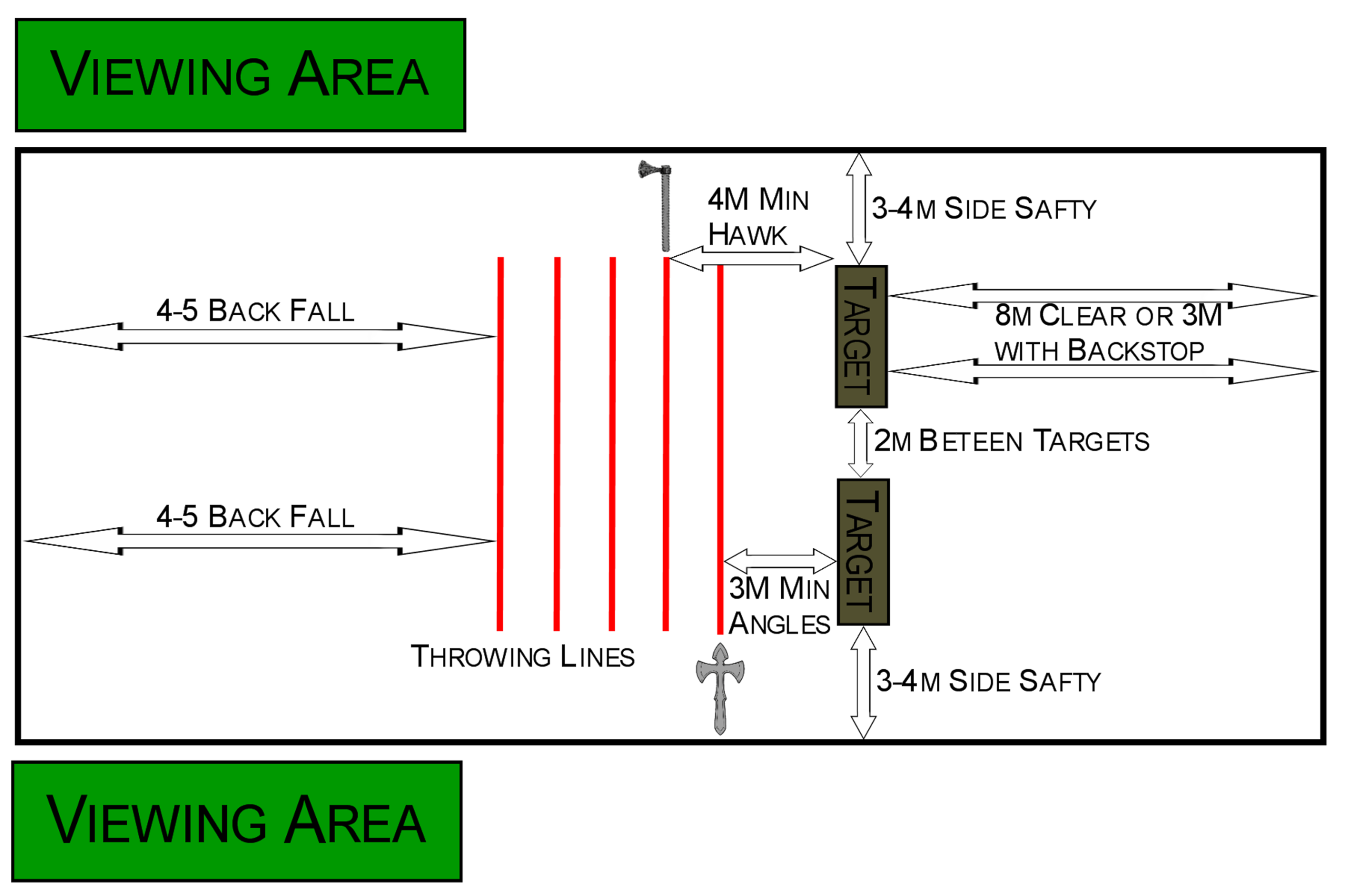
Range Safe Setup
The distances shown in the suggested tomahawk throwing range layout should be treated as minimum safety distances.
A Viewing Area should be provided towards the rear and sides of the range, rather than immediately alongside the throwers. This helps reduce distractions and keeps spectators away from the active throwing area.
The Side Safety Distance should be a minimum of 3–4 metres, where the available space allows.
Throwing lanes must be 2 metres apart. This provides sufficient space for the instructor to supervise and give guidance while maintaining a safe area around each thrower.
The distance between the Throwing Line and the Target must never be less than:
- 3 metres for Angles/Small Hawks
- 4 metres for Tomahawks
Back-fall distance should be 4–5 metres minimum and must not be reduced, as a shorter distance increases safety risks.
A backstop must be positioned behind the targets to help stop missed or stray hawks.
For portable ranges, use secure archery backstop poles with suitable safety or building net not netting.
An 8–10 metre clear safety border around a portable range is recommended to provide additional separation from surrounding activities.
Throwing Range Boundaries
The throwing range should have clearly marked boundaries and be positioned away from overhead obstructions such as tree branches, cables, wires and pipework.
For permanent outdoor ranges, 6 ft (1.8 m) fencing around the perimeter is recommended to help prevent people from accidentally entering the throwing area.
For portable or temporary ranges, clearly mark the boundaries using boundary tape or brightly coloured rope supported by staves. The boundary should be clearly visible and remain secure throughout the activity.
The throwing area must be kept clear of unauthorised people while throwing is taking place.
Instructor and Range Master Positions
- Instructors must never stand directly behind a thrower while throwing is taking place.
- Instructors should position themselves safely to the side of the throwing lane where they can provide instruction without entering the thrower's line of fire.
- Range Masters should position themselves to the side of the range, where they have a clear view down the range and across all throwing lanes.
- No instructor, Range Master or other person should enter the throwing area while axes or tomahawks are being thrown.
Safe Handling and Carrying
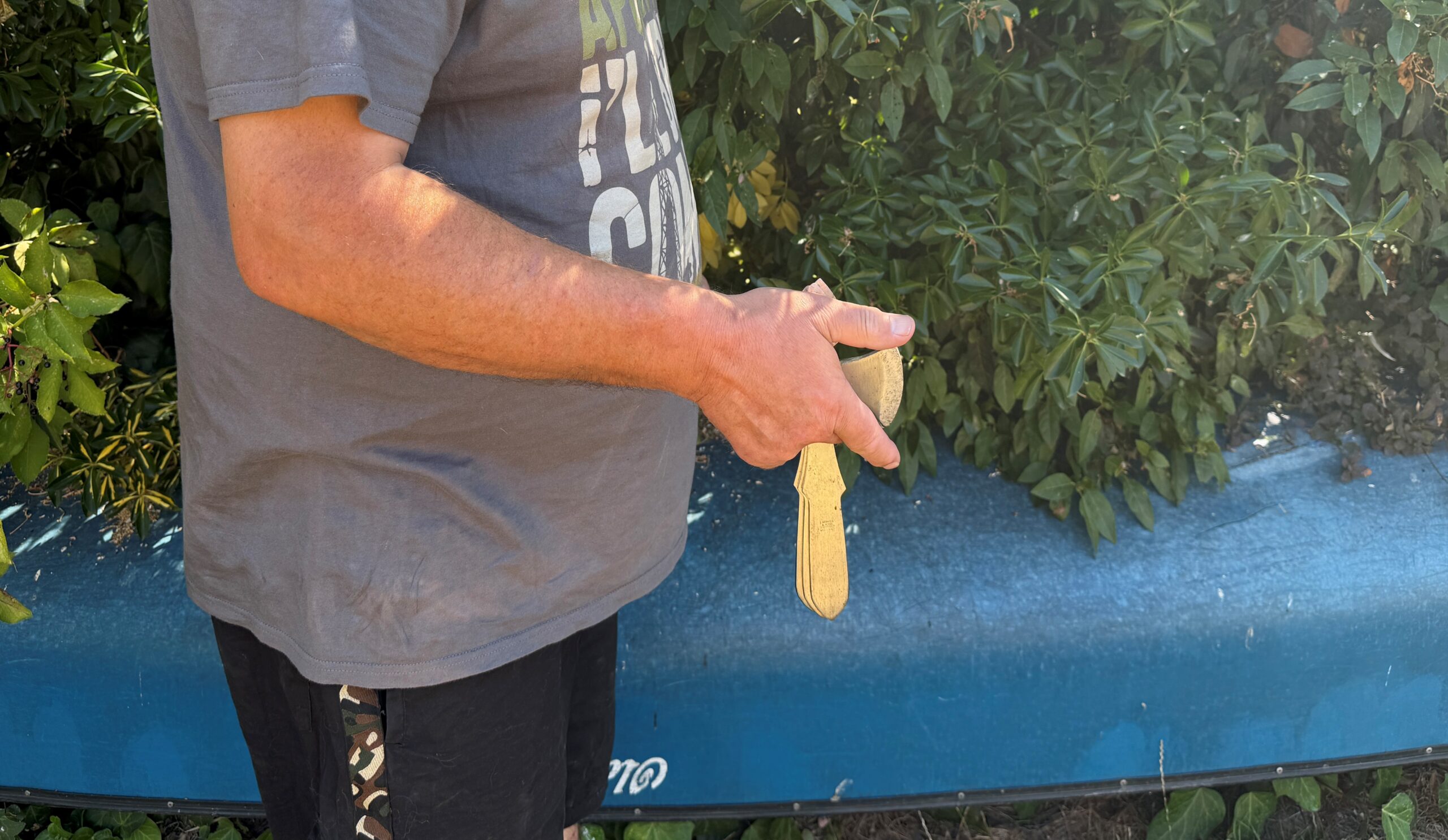
Safe Carry for Angles/Small Hawks
Carry throwing angels in groups of three. Hold all three face-up between your four fingers, with the points facing up and away from your body.
Remove throwing angels from the side of the target, never from directly in front.
If an angel is firmly embedded, gently move the handle up and down to help loosen it before pulling it free. Do not use excessive force.
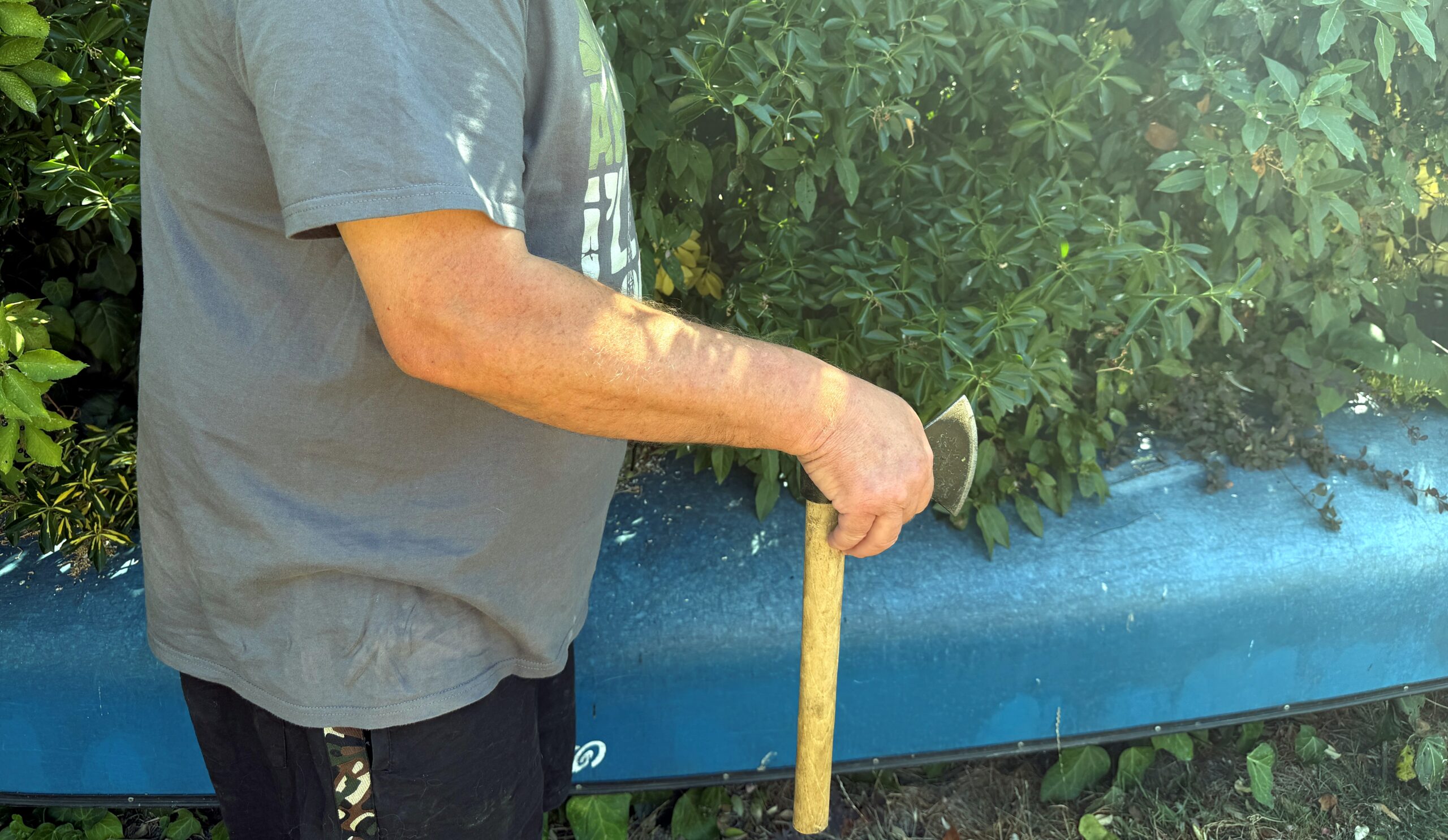
Safe Carry for Tomahawks
When moving from the target back to the holder, only move when the Range Master/Instructor has given the instruction that it is safe to collect.
Keep the tomahawk down at your side, slightly in front of you. Hold the head in a loose grip, with the sharp edge facing away from your body.
Keep the tomahawk under control and walk — never run.
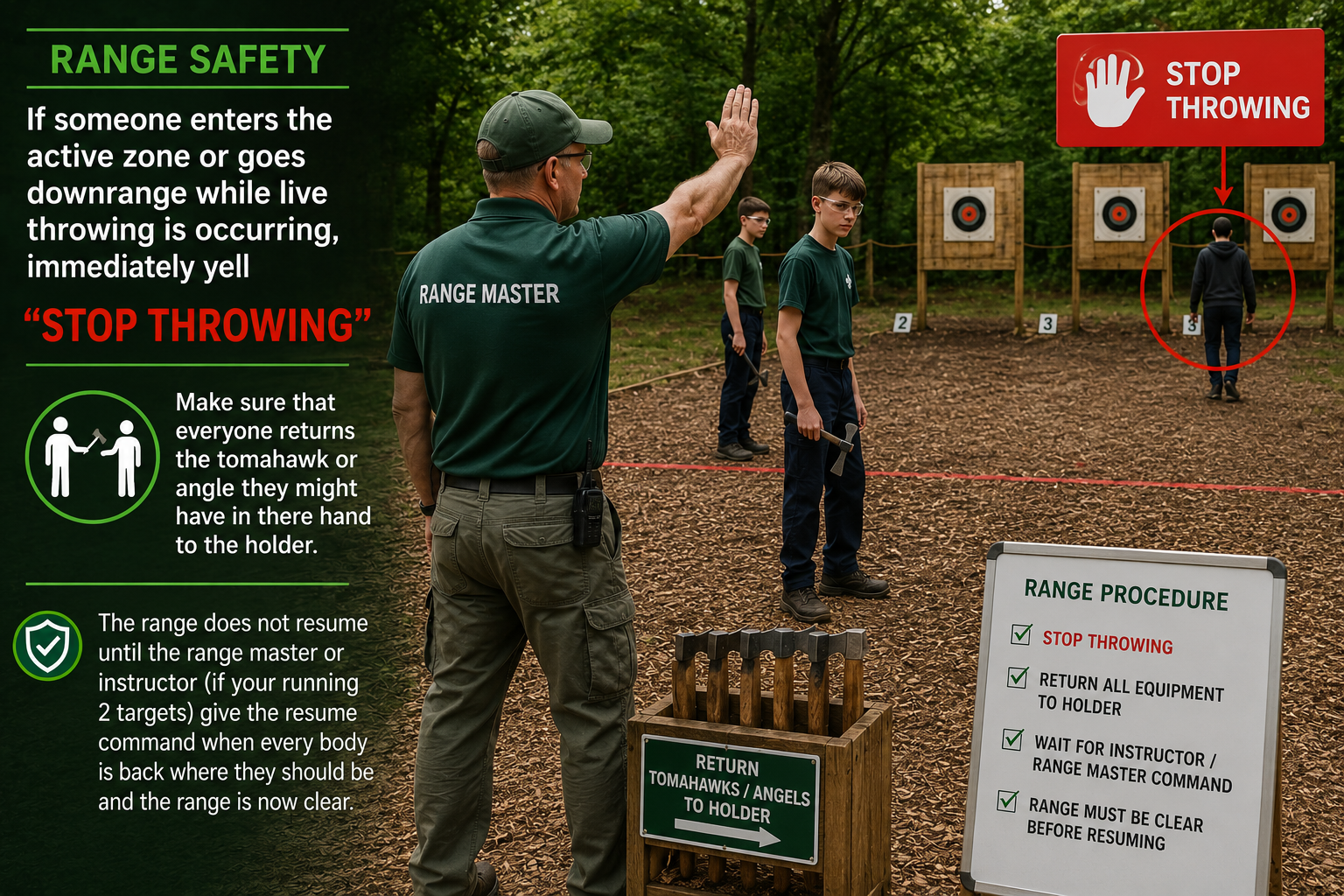
What to do when Someone Enters the Range
If someone enters the active zone or goes downrange while live throwing is occurring, immediately yell "Stop Throwing"
Make sure that everyone retutns the tomahalk or angle they might have in there hand to the holder.
The range dose not resume until the range master or instuctor if your running 2 targets give the resume comand when every body is back where they should be and the range is now clear.
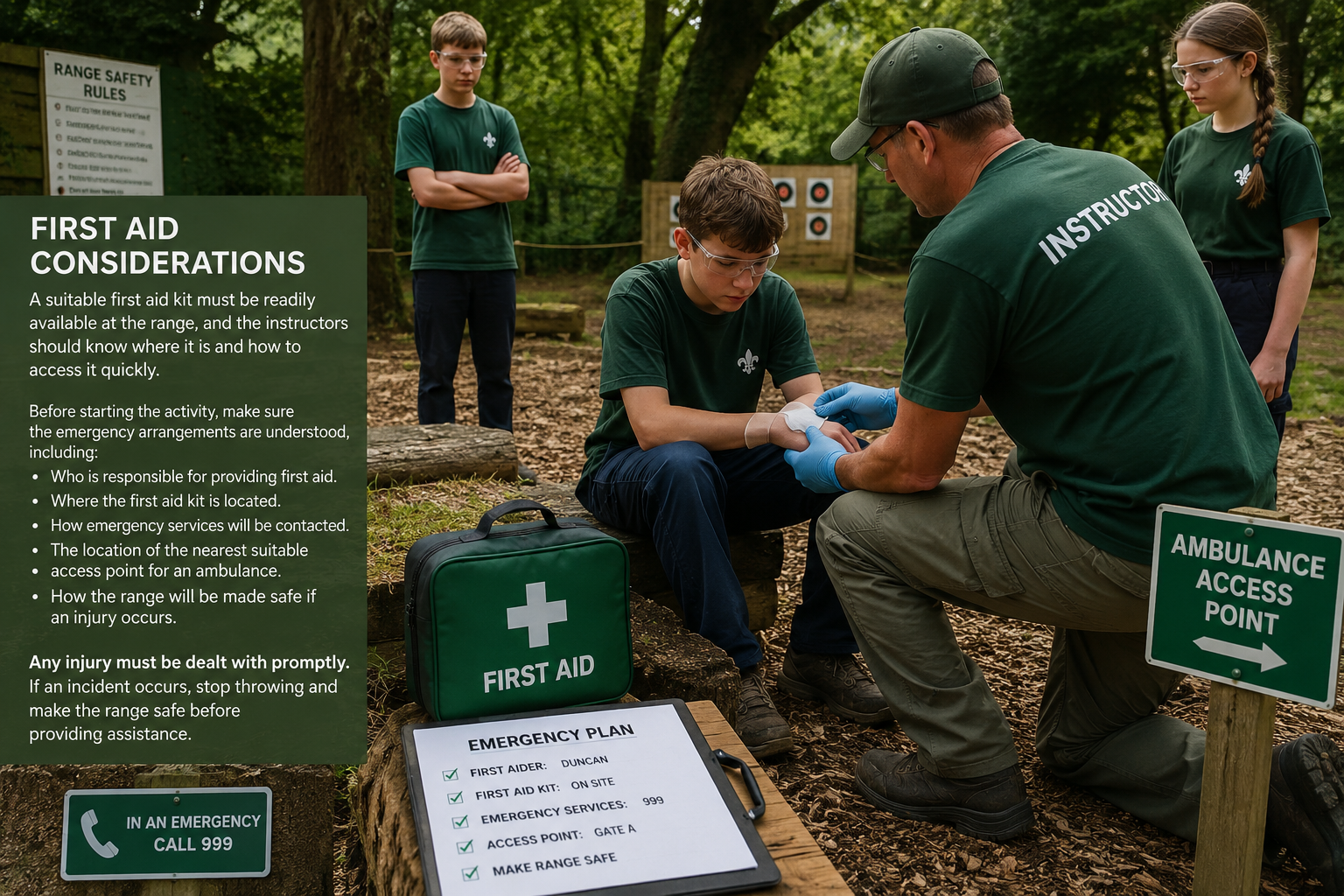
First Aid Considerations
A suitable first aid kit must be readily available at the range, and the instructors should know where it is and how to access it quickly.
Before starting the activity, make sure the emergency arrangements are understood, including:
- Who is responsible for providing first aid.
- Where the first aid kit is located.
- How emergency services will be contacted.
- The location of the nearest suitable access point for an ambulance.
- How the range will be made safe if an injury occurs.
Any injury must be dealt with promptly. If an incident occurs, stop throwing and make the range safe before providing assistance.
Equipment Checks
When the range is in use, throwing angels may sometimes be thrown in groups of three, causing them to strike and clash with each other.
This can cause sharp burrs, chips or other damage to the throwing angels.
- Regularly check throwing angels for burrs, chips, cracks or other damage.
- Pay particular attention to angels that have struck or collided with another angel.
- File off any damaged angel from service immediately.
- Do not allow damaged equipment back onto the range until it has been properly inspected and made safe.
- Include equipment checks as part of the range opening, during-session and end-of-session checks.
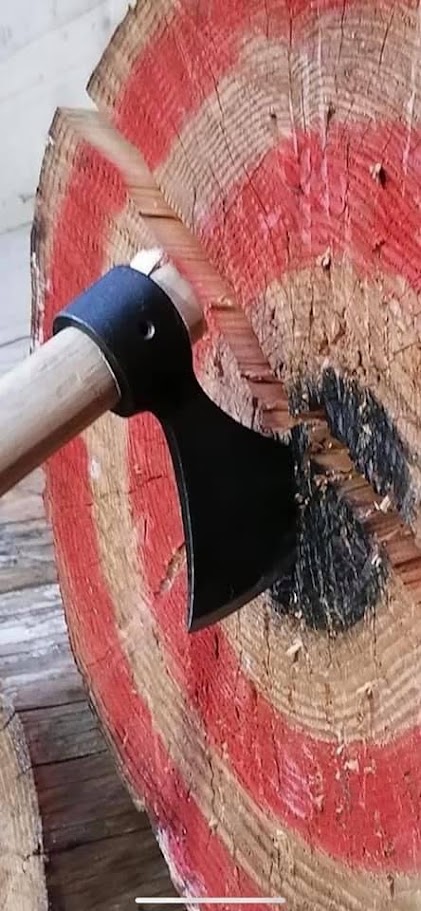
Dont throw more than one tomahawk, most ranges give you two, but when one sticks you dont throw the second. This is done to save damaged handles and large blade chips can make the tomahawk unusable.
General Tomahawk Safety FAQs
Is tomahawk throwing safe for Scouts?
Tomahawk throwing can be a safe and enjoyable Scouting activity when it is properly planned, supervised and delivered by trained instructors. A suitable throwing area, clear safety procedures and appropriate supervision are essential.
What age can Scouts take part in tomahawk throwing?
The appropriate age depends on the individual Scout, the equipment being used, the activity setup and the organisation's rules and risk assessment. Leaders should consider the participant's maturity, ability to follow instructions and understanding of safety procedures.
Does a tomahawk throwing activity need a risk assessment?
Yes. A suitable risk assessment should be completed before running a tomahawk activity. It should consider the equipment, throwing area, participants, supervision, spectators, emergency arrangements and potential hazards.
Who should supervise a Scout tomahawk activity?
Tomahawk throwing should be supervised by a competent and appropriately trained instructor or leader. The person running the activity should understand the equipment, safe throwing technique, range procedures and emergency arrangements.
How far should Scouts stand from the target?
The throwing distance should be established by the instructor according to the equipment, activity and training being provided. Participants should remain behind the designated throwing line or in their assigned safe position until instructed otherwise. 3m plus for Angles and 4m Plus for Tohmahawks.
Can spectators stand beside the throwing area?
No. Spectators and other participants must remain in the designated safe area. Nobody should enter the throwing or target area while the range is active.
What should happen before anyone throws a tomahawk?
The Range Leader or instructor should check that the range is clear, confirm that everyone is in their designated safe position and give the instruction to begin. Participants should only throw when instructed to do so.
What should I do if a tomahawk misses the target?
Do not immediately run towards the target to retrieve it. Wait until the Range Leader has declared the range safe and gives permission for participants to enter the target area.
Can Scouts retrieve their own tomahawks?
Only when the Range Leader has declared the range safe and given permission to enter the target area. Everyone else must remain in their designated safe position while tomahawks are being retrieved.
What personal protective equipment is required?
The equipment required will depend on the activity and risk assessment but basicly No. Participants should wear suitable clothing and footwear and should avoid loose clothing or anything that could interfere with safe throwing.
How should a tomahawk be checked before use?
Before use, inspect the tomahawk for damage and make sure the head is securely fitted to the handle. Check the cutting edge, handle and head for defects, and look for burrs or other damage. Any unsafe equipment should be removed from use.
Can a damaged tomahawk be used?
No. Any tomahawk with a loose head, damaged handle, damaged cutting edge or other defect should be taken out of service until it has been properly repaired or replaced.
What type of target should be used?
The target should be suitable for tomahawk throwing and maintained in good condition. It should provide an appropriate surface for the tomahawk to stick into without creating unnecessary hazards from excessive bounce or deflection.
Can tomahawks be thrown at any target?
No. Only targets that have been assessed as suitable for the activity should be used. Targets should be positioned securely and checked regularly for damage and deterioration.
Can more than one person throw at the same time?
Only if the range has been specifically designed and controlled for multiple throwers and scout an there . The Range Leader must ensure that the arrangement is safe, that throwers have clearly defined positions and that everyone understands the range commands. One target per one thrower at all times.
| Number of Targets | Activity Leaders Required | Range Master Required? | Max Participants on Range |
|---|---|---|---|
| 1 to 2 Targets | 1 Leader | No | 5 to 10 participants |
| 3 Targets | 1 Leader | Yes | 15 participants |
| 4 to 6 Targets | 2 Leaders | Yes | 20 to 30 participants |
What are the basic range safety rules?
Everyone should follow the instructor's briefing and remain in their designated safe position. No one should cross the throwing line or enter the target area until the Range Leader has declared the range safe.
What should happen if someone enters the range unexpectedly?
All throwing must "Stop" immediately. The Range Leader should ensure that all tomahawks have stopped being thrown and that the person is safely clear before the activity resumes.
Should participants be given a safety briefing?
Yes. Every participant should receive a safety briefing before taking part. This should cover the throwing area, safe positions, throwing procedure, range commands, retrieving tomahawks and what to do in an emergency.
At very large event i hacve seen this done by a video presentation.
Why is supervision important during tomahawk throwing?
Tomahawks are edged tools and are not generally very sharp, but can cause serious injury if used incorrectly. Active supervision helps ensure that participants follow instructions, the range remains controlled and unsafe behaviour is dealt with immediately.
Can tomahawk throwing be used as a Scouting competition?
Yes, provided the competition is properly planned and operated within the organisation's safety requirements. Competitive activities should never encourage participants to ignore safety procedures or rush their throwing technique.
What should I do if I am unsure whether the range is safe?
Do not throw. Ask the Range Leader or instructor. If there is any doubt about safety, stop the activity until the situation has been checked and confirmed safe. Safty First
Where can I find more information about tomahawk safety?
The safety guidance on this website should be used alongside your organisation's current rules, policies, activity guidance and local risk assessment. Leaders should always follow the most current requirements applicable to their Scout group and activity.
The UK Scout Association rules regarding Tomahawk Throwing (FS120011) are part of a live framework. All factsheets and Policy, Organisation and Rules (POR) regulations are continuously updated by UK Headquarters to reflect current safety data and equipment standards.
My Links
Scouing Links
Location: Essex